Have you ever wondered why leaders cannot just do whatever they want? In many places, there are strict rules that tell the government “no.” This is the core of limited government. Think of it like a game of soccer. Players have to stay inside the lines, and the referee makes sure everyone follows the rules. Without those lines, the game would be a mess! A limited government works the same way by using a constitution to set boundaries. This ensures that the people keep their rights and the leaders do not get too much power. It is all about balance and making sure everyone stays safe and free.
When we look at the limited government definition, it really means that the law is higher than any person. Even the president or a prime minister must follow the same rules as you and me. This idea helps protect our speech, our homes, and our choices. Without these limits, a government could take things away without asking. By keeping the government small and focused, society can grow in a healthy way. It is a big idea, but it is actually quite simple when you break it down into small pieces. Let’s dive into how it works and why it is so important for our daily lives.
The Simple Limited Government Definition
To define limited government, we have to look at where power comes from. In this system, power comes from the people, not the leaders. The definition of limited government is a political system where legalized force is restricted through delegated and enumerated powers. In simpler terms, it means the government can only do what the law says it can do. If the law doesn’t say “yes,” then the answer is “no.” This keeps the government from getting too big or bossy. It acts more like a helper than a master, focusing on things like safety and fair courts.
Understanding what is limited government helps us see the beauty of freedom. Imagine a fence around a garden. The fence keeps the dog out so the flowers can grow. The “fence” is the law, and the “flowers” are your rights. Most people agree that a limited government is the best way to prevent someone from taking over and acting like a king. It creates a predictable world where you know the rules won’t change overnight. This stability is why so many countries try to use this model to protect their citizens and help their businesses thrive.
History of Restricting Power
The idea of a limited government is not new. It has been around for hundreds of years! Long ago, kings had “absolute power,” which meant they could do anything. People eventually got tired of this and started writing documents like the Magna Carta. This famous paper told the King of England that he had to follow the law too. Later, during the Enlightenment, thinkers like John Locke argued that every human has natural rights. They believed that the only reason to have a government is to protect those rights. If a government stops doing that, the people have a right to change it.
These historical steps led to the limited government examples we see in modern constitutions today. The founders of many nations realized that power is like fire. It can be very helpful for warmth, but if it gets out of control, it can burn the whole house down. By creating branches of government that watch each other, they built a “fireplace” to keep the power contained. This history shows us that freedom is something people have fought for over a long time. It is a precious gift that requires constant care and attention to keep the boundaries strong.
What Does Limited Government Mean for You?
You might ask, what does limited government mean for my actual life? It means you have the right to choose your own path. It means the police cannot enter your home without a very good reason and a legal paper. It also means you can say what you think, even if the leaders do not like it. Because there is a limited government, you are the boss of your own life. You get to decide where you work, what you believe, and how you spend your time. The government is just there to make sure nobody else hurts you or steals your stuff.
In a limited government, the focus is often on the individual. Instead of the state telling you how to live, you get to explore your own dreams. This creates a very “people-first” environment. When the government stays in its lane, people tend to be more creative and hardworking. You don’t have to worry about the rules changing every time a new leader is elected. This sense of security is the biggest benefit of a limited government. It gives everyone a fair shot at success without the fear of the government stepping in to stop them for no reason.
Helpful Limited Government Examples
Let’s look at some real-world limited government examples to see this in action. The United States is a famous example because it has a written Constitution. This document lists exactly what the government can do, like printing money or declaring war. Another example is a local school board. They can decide on books and schedules, but they cannot tell you what color to paint your house. That is a limit on their power! Even a small town council is a limited government because they have to follow state and national laws while serving the local people.
In these limited government examples, we see “checks and balances.” This is when different parts of the government watch each other. For instance, a president might want a new law, but the court can say it is not allowed. This “no” is a sign that the limited government is working correctly. It prevents any one person from having too much control. When you see a leader being told they can’t do something by a judge, you are seeing a limited government in action. It is a system designed to protect the “little guy” from the “big state.”
Visualizing Power: A Limited Government Drawing
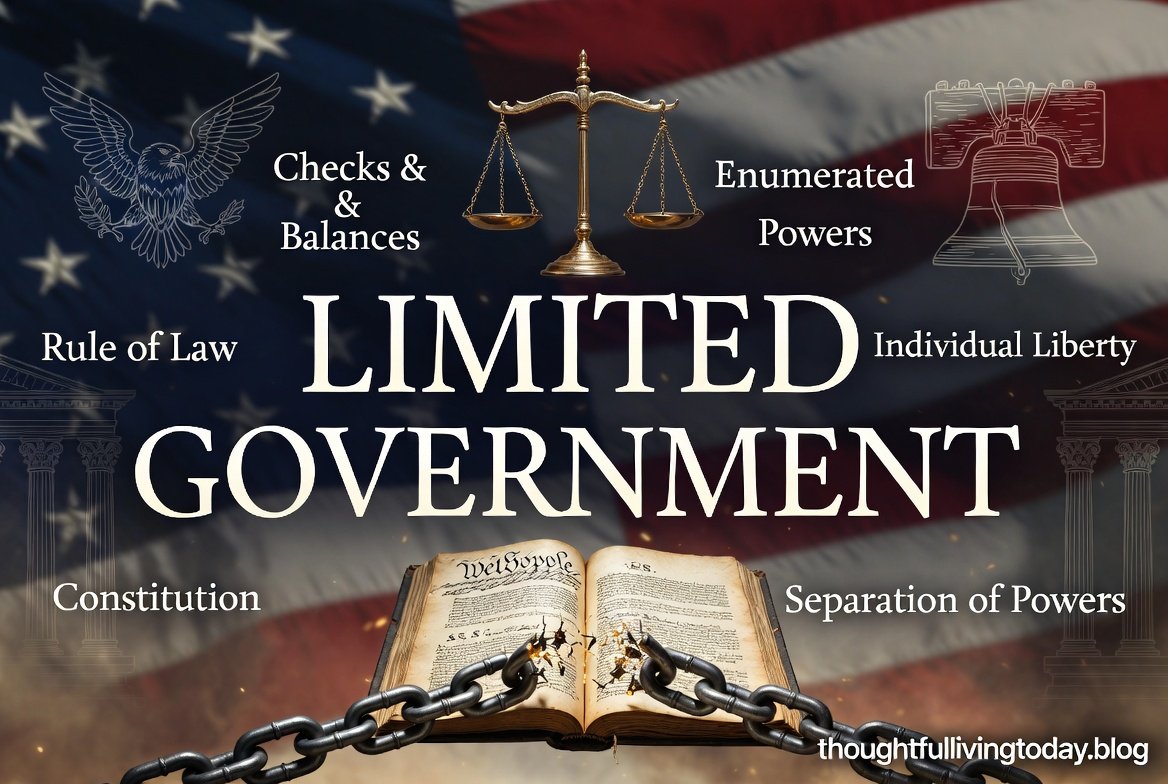
If you were to create a limited government drawing, what would it look like? You might draw a large circle representing the country, and inside, a much smaller box representing the government. Outside that small box, you would draw symbols of people, shops, and churches. This shows that the government only occupies a small space in our lives. Another limited government drawing could be a person holding a shield labeled “The Constitution.” The shield blocks giant hands labeled “Unfair Taxes” or “Strict Rules” from reaching the person.
A limited government drawing helps us visualize that the state should not be everywhere. It should not be in your pockets, your phone, or your private thoughts. Using a drawing is a great way to teach kids about what is a limited government. It makes a complex political idea feel like a simple map. When we see the lines clearly drawn, we understand where the government’s job ends and our freedom begins. This visual clarity is why many people love the idea of a limited government—it makes the rules of life easy for everyone to see and follow.
Key Characteristics of Restrained Systems
There are a few things that every limited government has in common. First is the “Rule of Law.” This means the laws apply to everyone equally. Second is “Social Contract,” which means the people agree to be governed only if their rights are protected. Third is “Separation of Powers.” By splitting the government into parts, no one part gets too strong. This is a classic example of limited government design. It creates a system of “rock, paper, scissors” where every part has a way to check the other parts.
Another key part of a limited government is free elections. If the people do not like what the leaders are doing, they can vote them out. This is the ultimate limit! It reminds the leaders that they are working for us, not the other way around. Most limited government systems also have a bill of rights. This is a list of things the government is strictly forbidden from doing. These characteristics work together like the gears in a watch. If one gear stops, the whole thing might break, so it is important to keep every part of the limited government healthy.
Limited Government vs. Unlimited Systems
To truly understand what is a limited government, it helps to look at the opposite. An unlimited government is often called an autocracy or a dictatorship. In those systems, the leader can change the rules whenever they want. There are no “no-go” zones for the state. They might tell you where to live or what job to take. This is why a limited government is so special. It provides a “safe zone” for citizens to be themselves. In an unlimited system, the people serve the state. In a limited government, the state serves the people.
The definition of limited government emphasizes that the state is small and restricted. In an unlimited system, the state is huge and touches everything. Most people prefer a limited government because it feels more fair and less scary. You don’t have to worry about a “secret police” or losing your property for no reason. History shows that countries with a limited government usually have happier people and stronger economies. This is because people feel safe to invest their time and money when they know the government won’t just take it away later.
How to Protect a Limited Government
A limited government does not stay limited by accident. It takes a lot of work from the citizens! We have to stay informed and vote for people who respect the rules. If we stop paying attention, the government might start growing and taking more power than it should. This is often called “mission creep.” To keep a limited government strong, we must speak up when we see the rules being broken. Reading the constitution and understanding what does limited government mean is the first step for any good citizen who wants to stay free.
Education is the best tool to protect a limited government. When kids learn the limited government definition early, they grow up knowing their rights. They become adults who ask questions and demand transparency. We can also protect a limited government by supporting local groups and charities. When we take care of each other, the government doesn’t need to step in as much. By being active and responsible, we keep the government in its small, helpful box. It is a team effort that never really ends, but the reward of freedom is totally worth it.
Conclusion
In the end, a limited government is all about making sure that you are the author of your own story. By setting clear rules and boundaries, we prevent power from being used to hurt people. Whether you are looking at a limited government drawing or reading the latest laws, remember that these limits are there to protect you. A limited government is a sign of a mature and free society that trusts its citizens to make good choices. It is a system that values the person over the state, and that is something worth celebrating and protecting every single day.
If you enjoyed learning about what is a limited government, why not share this with a friend? The more people who understand these ideas, the stronger our freedoms become. Let’s keep the conversation going and make sure our leaders always stay within the lines!
Faqs
1. What is the best limited government definition?
The best limited government definition is a system where the government’s power is restricted by law, usually a constitution, to protect individual rights.
2. Can you give a simple example of limited government?
A great example of limited government is the First Amendment in the U.S., which says “Congress shall make no law” regarding religion or free speech. It is a direct “no” to the government.
3. Why do we need a limited government?
We need it to prevent leaders from becoming too powerful and taking away our freedom. It ensures that everyone follows the same rules and that our rights are safe.
4. How does a limited government drawing help us?
A limited government drawing makes it easy to see that the state should only do a few things, while the people have the most space to live their lives.
5. What is the difference between limited and unlimited government?
In a limited government, the law controls the leaders. In an unlimited government, the leaders control the law and can do whatever they want.
6. Who started the idea of limited government?
While many people helped, thinkers like John Locke and the authors of the Magna Carta were some of the first to define limited government as a way to protect people from kings.
References:
- The National Archives: The Magna Carta and Its History.
- Stanford Encyclopedia of Philosophy: John Locke’s Political Philosophy.
- U.S. Constitution: Article 1, Section 8 (Enumerated Powers).