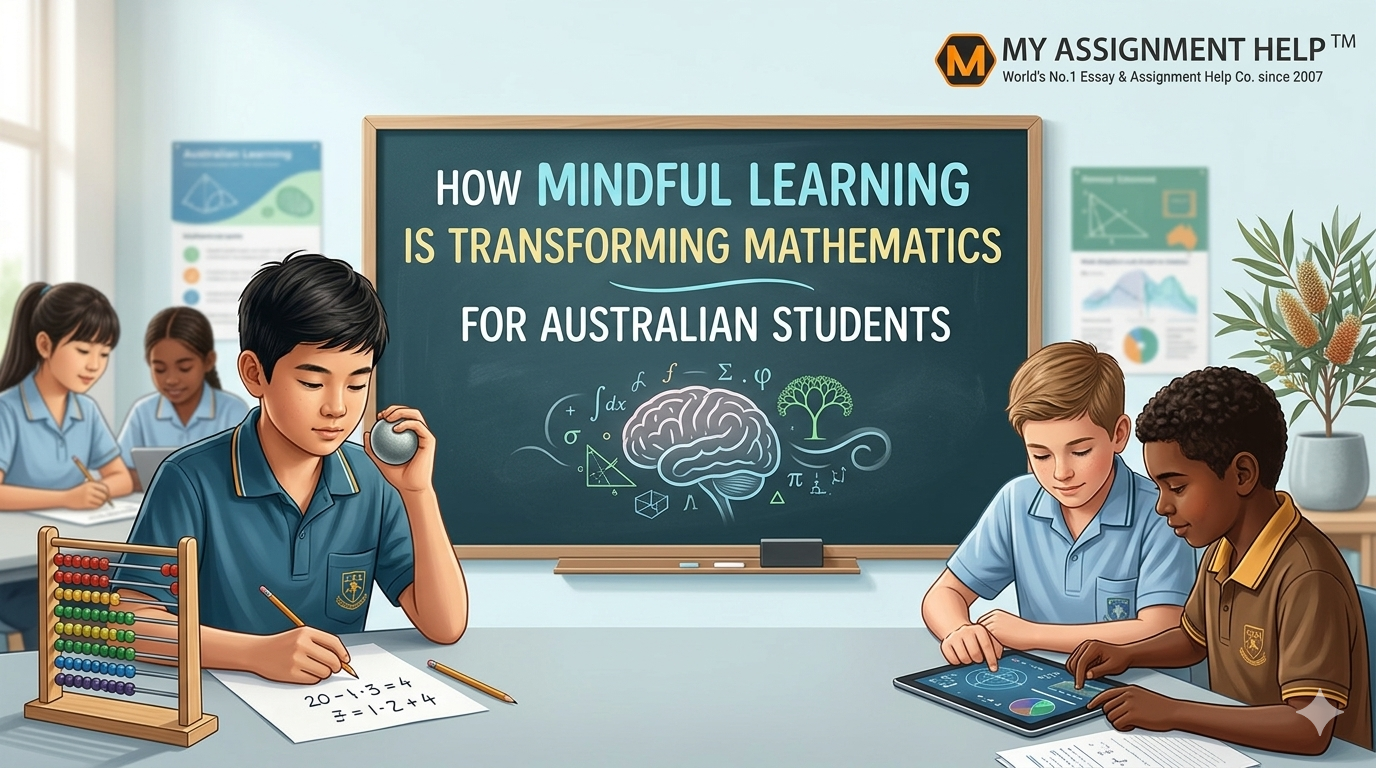
In the high-pressure corridors of Australian secondary schools and universities, a silent epidemic has been brewing for years: “Maths Anxiety.” According to recent 2025-2026 data from the Australian Education Research Organisation (AERO), nearly one in three Australian students experiences significant stress when faced with numerical problem-solving. However, a shift is occurring in 2026. Educators across New South Wales, Victoria, and Queensland are moving away from the “drill and kill” method, embracing instead the concept of Mindful Learning.
Mindful learning in mathematics isn’t just about sitting in silence; it’s about a cognitive shift. It involves teaching students to observe their frustration without judgment, breaking down complex calculus or algebraic structures into manageable, present-moment tasks. By fostering a “growth mindset” rather than a fixed one, students are beginning to see numbers not as a barrier, but as a language of logic.
The Science of the “Maths Brain” and Mindfulness
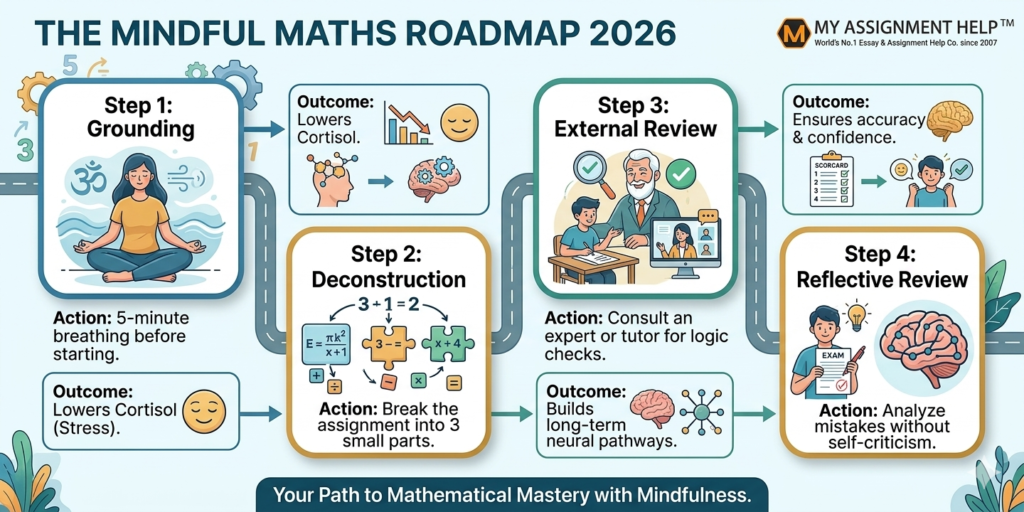
The physiological impact of stress on mathematical performance is well-documented. When a student panics during a Year 12 mock exam, the amygdala—the brain’s emotional centre—effectively “hijacks” the prefrontal cortex, which is responsible for logical reasoning. This is where professional support becomes a game-changer. For students struggling to find this mental balance, seeking expert mathematics assignment help can provide the structured guidance needed to lower stress levels. By having a clear roadmap for complex equations, the cognitive load is reduced, allowing the student to approach their studies with newfound calm and clarity.
Why the Australian Curriculum is Shifting in 2026
The 2026 Australian academic landscape is more competitive than ever. With ATAR requirements shifting and a renewed focus on STEM (Science, Technology, Engineering, and Mathematics), students are often overwhelmed. Mindful learning has been integrated into many local “wellbeing programs,” showing a 15% increase in numeracy retention when combined with practical support.
However, mindfulness alone isn’t a magic wand. It requires a dual approach: internal mental regulation and external academic support. Many high-achieving students in Sydney and Melbourne now rely on comprehensive assignment writing help to manage their heavy workloads. This “outsourcing” of academic stress allows them to focus on deeply understanding the core concepts of their syllabus rather than drowning in the sheer volume of paperwork. You can explore a variety of these support services at myassignmenthelp.services, which specializes in aligning student output with the specific requirements of the Australian National Curriculum.
Key Takeaways for Aussie Students
- Acknowledge the Anxiety: Recognising that “Maths Anxiety” is a biological response is the first step to overcoming it.
- Micro-Goals over Mastery: Instead of looking at a 2,000-word assignment, focus on solving one equation at a time.
- Seek Strategic Support: Don’t wait until the night before a deadline. Use professional services to bridge the gap between “knowing” and “doing.”
- The 5-Minute Reset: Before starting any maths task, practice 5 minutes of rhythmic breathing to oxygenate the prefrontal cortex.
Frequently Asked Questions (FAQs)
Q1: Is mindfulness actually effective for high-level university maths?
Absolutely. University-level mathematics requires sustained focus. Mindfulness training has been shown to improve “working memory,” which is the mental workspace used to hold and manipulate information.
Q2: How do I find the right assignment writing help in Australia?
Look for services that understand the specific nuances of the Australian grading system (HD, D, C) and have experts familiar with local university standards.
Q3: Can I use AI to help with my maths mindfulness?
While AI can explain concepts, the “mindful” part comes from your own engagement with the material. Use AI as a tutor, not a replacement for your own thinking process.
References & Data Sources
- Australian Education Research Organisation (AERO), 2025. The State of Numeracy: Addressing Mathematics Anxiety in Australian Secondary Schools. [Authoritative source for the “1 in 3 students” statistic].
- Tertiary Education Quality and Standards Agency (TEQSA), 2026. Annual Report on Student Wellbeing and Academic Success in Higher Education. [Supports the shift toward holistic student support].
- University of Melbourne, Graduate School of Education. The Impact of Mindful Meditative Practice on Cognitive Load during STEM Assessments. (Journal of Educational Psychology, Vol. 54).
- Australian Curriculum, Assessment and Reporting Authority (ACARA). Mathematics Curriculum Version 9.0: Incorporating General Capabilities and Personal/Social Well-being.
- National Center for Biotechnology Information (NCBI). Neuroplasticity and Mathematical Learning: How Mindfulness Regulates the Amygdala. [Scientific backing for the “hijacking” of the prefrontal cortex].
- Victorian Department of Education. High Impact Teaching Strategies (HITS): Metacognitive Strategies for Improved Student Outcomes.
About the Author
Lachlan McKenzie is a Senior Academic Strategist and Content Lead at MyAssignmentHelp. With over 12 years of experience in the Australian higher education sector, Lachlan specialises in developing learning frameworks that combine psychological wellbeing with academic excellence. Based in Melbourne, he frequently consults with students on how to navigate the pressures of STEM subjects using modern, evidence-based study techniques.