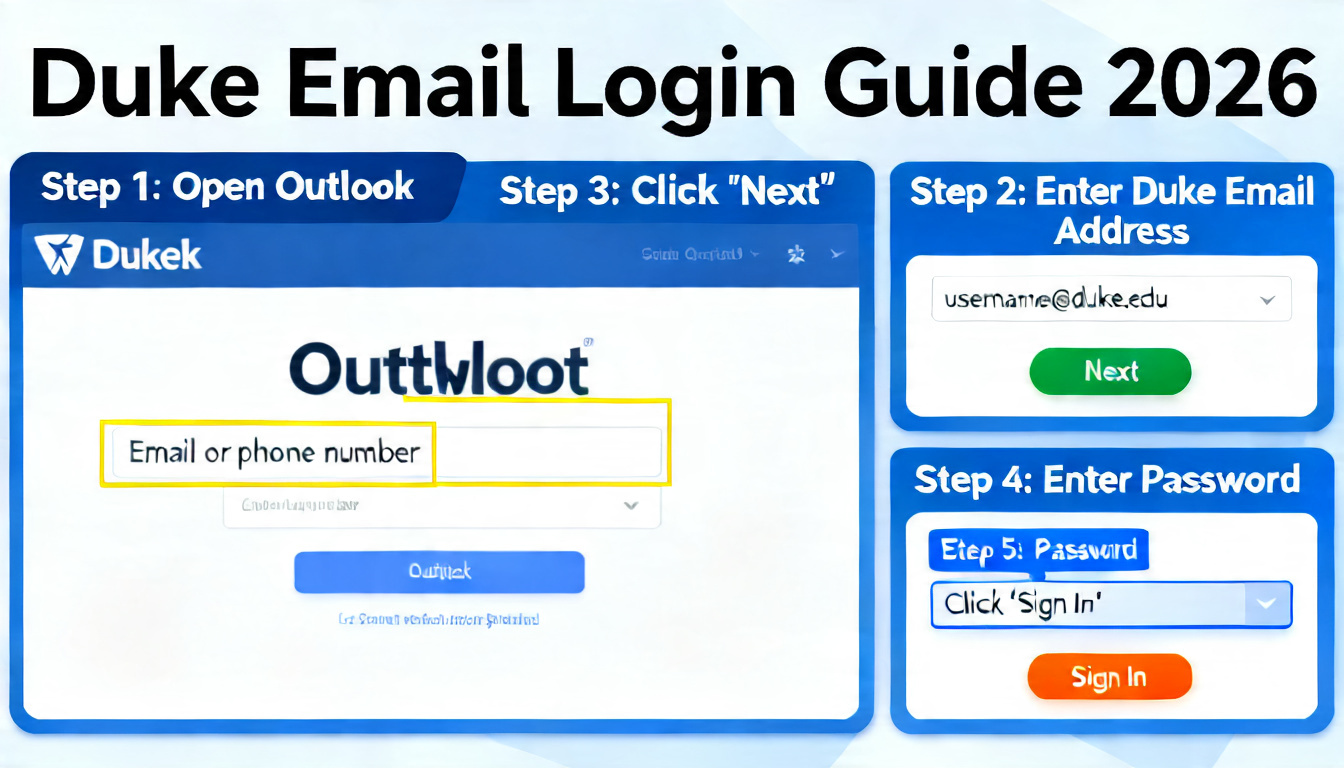
Accessing your campus communication should be the easiest part of your day. Whether you are a fresh-faced student or a busy faculty member, staying connected through your duke email login is vital. Duke University uses a powerful system powered by Microsoft to make sure your messages, calendars, and files are always at your fingertips. In this guide, I will walk you through everything you need to know to get into your inbox without any stress. We will cover web access, mobile setup, and some pro tips to keep your account safe.
Starting with the Duke Email Login Basics
To get started, you need to know where to go. The most common way to check your messages is through the duke email login portal. Duke uses a “Single Sign-On” (SSO) system. This means once you log in to one Duke service, you are often logged into others like Canvas or DukeHub automatically. To find your mail, simply head to your browser and type in the official mail link. It will redirect you to the familiar Duke blue login page where you enter your NetID.
Accessing Duke Email Login Outlook Web
Most people prefer using the web version of Outlook because it requires no installation. When you look for duke email login outlook, you are essentially looking for the web-based “Outlook Web App” (OWA). This version is great because it looks the same on any computer. You get full access to your calendar, your folders, and even your “Tasks” list. It is very reliable and is usually the first place I recommend people go if they are having trouble with a mobile app.
Navigating the Duke Email Login 365 Portal
Duke has a deep partnership with Microsoft, which is why you might hear people call it the duke email login 365 portal. By logging in through the Microsoft 365 gateway, you don’t just get email; you also get access to Word, Excel, and PowerPoint online. This is perfect for students who need to finish a paper on the go. You just sign in with your full Duke email address (NetID@duke.edu), and the system knows exactly which organization you belong to.
How to Use My Duke Email Login for the First Time
If you are new to the university, setting up my duke email login is your first big task. You will receive an activation email to your personal account with instructions on how to create your password. Once your NetID is active, you are ready to go. Remember that your password is the key to all your student or employee records, so make it strong. I always tell new users to write down their NetID in a safe place until they have it memorized.
Setting Up Multi-Factor Authentication (MFA)
Safety is a big deal at Duke. When you perform a duke email login, you will likely be asked to verify your identity using Multi-Factor Authentication (MFA). Duke uses an app called Duo Security for this. After you enter your password, you will get a “push” notification on your phone. You just tap “Approve,” and you are in! It adds a very strong layer of protection. This way, even if someone steals your password, they cannot get into your private emails.
Accessing Your Mail on Mobile Devices
We all live on our phones, so getting your duke email login working on mobile is a must. The best way to do this is by downloading the official Microsoft Outlook app from the App Store or Google Play. Avoid using the “default” mail apps that come with your phone, as they sometimes have trouble with Duke’s security settings. Within the Outlook app, choose “Add Account,” type your Duke email, and it will take you through the Duke login screen smoothly.
Troubleshooting Common Login Issues
Sometimes, things don’t go as planned. If your duke email login isn’t working, the first thing to check is your internet connection. Next, make sure you aren’t using an old password that your browser might have saved. If you get an “Access Denied” message, it might be time to sync your MFA or check if your NetID has expired. Most issues are solved by clearing your browser’s “cache” or “cookies,” which gives the login page a fresh start.
Managing Your Duke Email Storage
Did you know that your duke email login 365 account comes with a massive amount of storage? Most users have plenty of space, but it is still a good idea to keep things tidy. I suggest deleting large attachments that you no longer need. If you are a researcher or a long-term staff member, you can use folders to archive old projects. Keeping your inbox clean helps the Outlook search tool find your important messages much faster.
Understanding the Difference: NetID vs. Email Alias
One thing that confuses people during a duke email login is the difference between their NetID and their alias. Your NetID is usually a mix of letters and numbers (like “abc12”). Your alias might be more professional, like “first.last@duke.edu.” While people can send mail to your alias, you usually need to use your NetID to actually log in to the system. Always use the NetID format when the login screen asks for your username.
Finding Help from Duke OIT
If you are truly stuck, the Duke Office of Information Technology (OIT) is there to help. They are the experts on the duke email login process. You can visit their “walk-up” desk in the library or give them a call. They also have a great website with “How-To” articles for almost every technical problem you can imagine. They are very friendly and understand that technology can be frustrating sometimes, so don’t be afraid to reach out!
FAQs
1. How do I reset my Duke email password?
To reset your password for your duke email login, you must visit the Duke OIT Self-Service website. You will need to verify your identity, usually through your security questions or your MFA device. Once verified, you can set a new, secure password that will work for all Duke services.
2. Can I keep my Duke email after I graduate?
Yes! Duke offers an “Alumni Email” service. While your student account might eventually close, you can often transition to an @alumni.duke.edu address. This allows you to keep the Duke connection for your resume and networking as you start your career.
3. Why does my Duke login keep asking for a Duo push?
This is for your security. Duke requires MFA for almost every duke email login outlook session to ensure that only you are accessing your data. You can often check a box that says “Remember me for 24 hours” to reduce the number of times you have to tap your phone.
4. Is the Duke email system compatible with Mac computers?
Absolutely. You can use the duke email login 365 through any web browser on a Mac (like Safari or Chrome). You can also download the Outlook for Mac application, which is part of the Office 365 suite provided for free to Duke students and staff.
5. What should I do if I lose my MFA phone?
If you lose the phone you use for your my duke email login authentication, you should contact the OIT Service Desk immediately. They can help you register a new device or provide you with temporary bypass codes so you don’t lose access to your important files.
6. Can I forward my Duke email to my personal Gmail?
While it is technically possible for some accounts, it is generally discouraged for security reasons. Using the official duke email login ensures that your university communications stay private and that you don’t miss important messages that might be blocked by external email providers.
Conclusion
Mastering your duke email login is a small but important step in your academic or professional journey. By using the official Outlook and Office 365 tools, you ensure that your work is backed up, secure, and easy to find. Remember to keep your Duo app handy and your password private. If you ever feel overwhelmed, just remember that the OIT team and your fellow “Dukies” are always there to support you. Happy emailing!
References:
- Duke Office of Information Technology (OIT) – Official Email Support
- Duke University Graduate School – NetID & Email Guidelines
- Microsoft Office 365 – Education Portal Documentation